
Open House Advertising Checklist: How to Use a Custom Realtor Inflatable Waver
🏡 Buyers Decide in Seconds—Make Your Open House Easier to Find
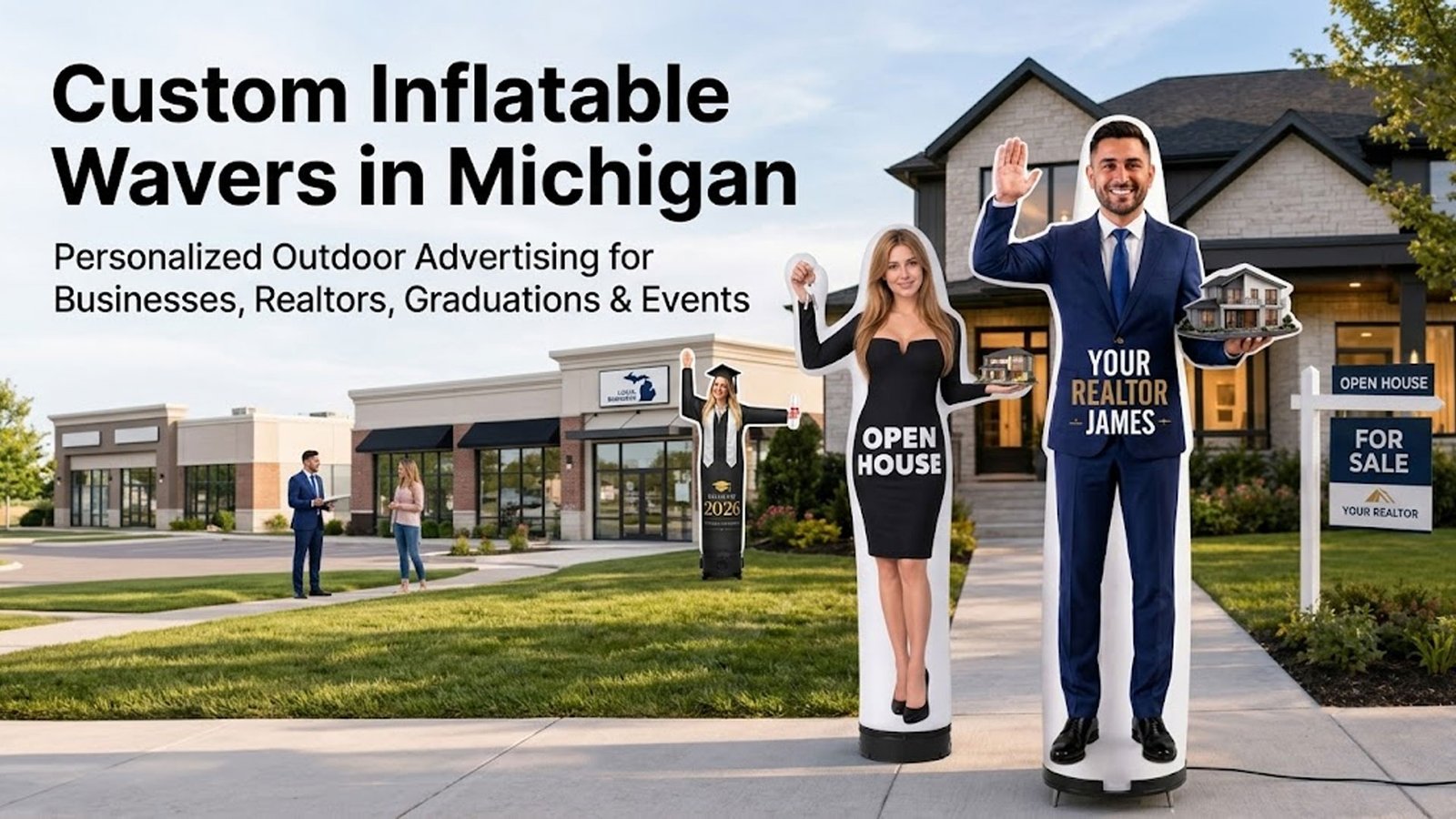
A strong listing can generate interest online and still lose visitors during the final approach to the property. Similar yard signs, parked vehicles, landscaping and unfamiliar streets can make an active showing surprisingly easy to miss. A custom realtor inflatable waver for open houses creates a moving, personalized landmark that helps buyers identify the event, connect it with the agent and understand what to do next.
Direct answer: Use a custom realtor inflatable waver as the main visual landmark in a simple open-house wayfinding system. Choose one short message, place the display where approaching visitors can see it early, support it with directional signs, and connect it to a trackable property page or QR code.
Open House Advertising Checklist at a Glance
- Choose one campaign goal: find the property, enter the showing or scan for details.
- Use a reusable agent-focused design instead of printing one permanent address.
- Keep the main message between two and five words.
- Review the approach from every useful traffic direction.
- Confirm property, HOA, venue and local temporary-display rules.
- Plan stable power, compatible blower placement and safe anchoring.
- Use a trackable QR code or dedicated landing page for measurement.
- Record attendance, scans, calls and follow-up conversations after the event.
Image placeholder: show the inflatable from the same viewpoint an approaching buyer would have.
Why Open Houses Need More Than Another Yard Sign
Online listing platforms solve the discovery problem. Street-level promotion must solve the arrival problem. Those are different marketing jobs.
A buyer who has already saved the listing does not need another long sales pitch at the curb. The buyer needs fast confirmation:
- Is this the correct property?
- Is the open house active now?
- Where should I park or enter?
- Who is hosting the event?
- Where can I find the property details?
A personalized inflatable can answer several of those questions through shape, movement, color and a short printed message. It works best when it is treated as part of the visitor journey rather than as a standalone decoration.
Expert insight: The best open-house display is not the one carrying the most information. It is the one a visitor understands before reaching the driveway.
Step 1: Define One Primary Objective
Begin with the action the display should support. Common objectives include:
- Help drivers recognize the correct property.
- Show that the open house is active.
- Direct visitors toward the entrance.
- Strengthen agent or brokerage recognition.
- Encourage pedestrians to scan for property details.
Trying to promote the agent, list every property feature, show a phone number, display a slogan and explain financing on one surface weakens the message. Select one dominant action and let the listing page handle the details.
Step 2: Build a Reusable Realtor Design
A custom realtor inflatable waver can be designed around an agent-inspired face, professional outfit, brokerage colors, logo and a general campaign message. A reusable design protects the investment by allowing the same display to support multiple listings, broker previews, model-home events and community promotions.
Details Worth Customizing
- Face-inspired artwork based on clear reference photographs
- Hair, outfit and professional presentation
- Agent name and brokerage logo
- Brand colors with strong text contrast
- A general message such as OPEN HOUSE or TOUR TODAY
- A QR code that can point to a changeable campaign page
Avoid permanently printing a street address unless the inflatable will remain tied to one development or property. A general agent-branded design is easier to move from one event to the next.
Step 3: Write a Message Drivers Can Read Quickly
Roadside copy should be understood at a glance. Strong messages include:
- OPEN HOUSE
- TOUR TODAY
- MODEL HOME OPEN
- NOW LEASING
- WELCOME HOME
- SCAN FOR DETAILS
Use the largest readable type for the primary message. Agent name, logo and phone number should support the headline rather than compete with it.
A Simple Message Hierarchy
- First: event or action
- Second: agent or brokerage identity
- Third: optional digital next step
Step 4: Choose a Size for the Viewing Distance
Common custom project directions include 10ft, 15ft and 20ft inflatable wavers. The right choice depends on the setback, traffic speed, nearby obstructions and available setup area.
10ft Realtor Waver
- Compact lawns and sidewalks
- Indoor property events with suitable ceiling height
- Agent booths and smaller leasing spaces
- Locations where a taller figure would overwhelm the setting
15ft Realtor Waver
- Typical residential open houses
- Model-home entrances
- Brokerage events
- Moderate setbacks from the road
20ft Realtor Waver
- Large sales centers
- Wide commercial approaches
- New-home community launches
- Large outdoor events with longer viewing distances
Height cannot compensate for a blocked sightline. A smaller display in a clear location can outperform a larger display hidden behind vehicles, trees or other signs.
Step 5: Use a Three-Zone Placement Plan
Zone One: Advance Notice
Place approved directional signage before the turn when visitors need early guidance. Advertising flags can support this role where property rules permit them.
Zone Two: Property Confirmation
Position the realtor waver where the property becomes visible. It should confirm that the buyer has reached the correct destination without blocking the driveway, sidewalk or driver sightlines.
Zone Three: Welcome and Check-In
Use a sign, branded table or custom pop-up tent near the approved welcome area for registration, brochures and agent interaction.
Information-gain perspective: Treating the inflatable as the middle point in a three-zone arrival sequence makes it more useful than placing it wherever an electrical outlet happens to be available.
Step 6: Plan Power, Anchoring and Weather Safety
Air-powered displays require a compatible blower, a stable installation area and an electrical plan that does not create a trip hazard. Review the product instructions and confirm the recommended blower option for the selected inflatable.
- Use the specified anchoring points and accessories.
- Keep cords away from walking and driving paths.
- Maintain clearance from overhead lines and tree branches.
- Do not operate during unsafe wind, thunderstorms, icing or severe weather.
- Assign one person to inspect the setup during the event.
Local requirements can vary. Confirm the rules for temporary displays, residential communities, model-home developments, shopping centers and event venues before installation.
Step 7: Connect Curbside Attention to a Digital Action
A QR code can connect the physical display to a property page, virtual tour, showing form, map, agent profile or lead-capture page. It should be designed for people who can stop and scan safely—not for moving drivers.
QR Code Best Practices
- Use a short, trackable destination URL.
- Maintain strong contrast around the code.
- Test the printed-size proof from several phones.
- Place the code at a practical pedestrian scanning height.
- Keep the main roadside message useful without the code.
Image placeholder: a simple diagram showing advance notice, property confirmation and visitor check-in.
How to Measure Whether the Display Worked
Track the campaign as an event asset, not a novelty. Useful measurements include:
- Total open-house attendance
- QR-code scans during event hours
- Calls or texts to a campaign-specific number
- Visitors who mention the inflatable
- Walk-ins who had not previously registered
- Social posts, photos or shares featuring the display
- Follow-up appointments generated after the event
Compare results across several events. One property, weather pattern or neighborhood can distort a single-day result.
Common Open House Display Mistakes
- Too much text: long copy reduces readability.
- Poor contrast: similar colors make the message disappear.
- Blocked placement: parked vehicles hide the display.
- No visitor path: attention is created without clear direction.
- Permanent property details: the design becomes difficult to reuse.
- Untested QR code: the physical-to-digital handoff fails.
- No weather plan: unsafe conditions force rushed decisions.
- No tracking: the team cannot judge performance.
Frequently Asked Questions
What is the best message for a realtor inflatable at an open house?
OPEN HOUSE, TOUR TODAY and WELCOME HOME are effective because they are brief and immediately relevant to the visitor.
Can one custom realtor inflatable be used for multiple listings?
Yes. Use general agent and brokerage branding, then direct visitors to the current property through a changeable sign or digital landing page.
Should a QR code be the main message?
No. The primary message should remain readable without a phone. A QR code is a secondary action for visitors who can approach and scan safely.
Where should the inflatable be placed?
Place it in a clear, approved sightline near the property confirmation point, with enough distance from vehicles, sidewalks, entrances and overhead hazards.
What size is suitable for a residential open house?
A 10ft or 15ft direction can suit many residential events, but the final choice should reflect the setback, viewing distance, available space and applicable local rules.
How early should an agent plan a custom design?
Begin before the campaign deadline so there is time to prepare photos, approve artwork, confirm production details and coordinate delivery.
Turn the Next Open House Into a Destination Buyers Can Recognize
Build a reusable display around your agent image, brokerage identity and clearest event message. Explore custom realtor inflatable wavers for open houses, then request a custom design and quote for your next listing, model home or property event.
Realtor Personal Branding Offline: Turn Your Agent Image Into an Inflatable Brand Ambassador
👋 Your Face Is Already on the Sign—Now Make It the Landmark
Realtor marketing is deeply personal. Buyers and sellers recognize the agent’s face from listing photos, neighborhood mailers, social profiles and yard signs. A personalized realtor inflatable extends that same identity into the physical environment, creating a reusable, moving brand ambassador for open houses, office events, model homes and community promotions.
Direct answer: A personalized realtor inflatable turns familiar brand elements—face-inspired artwork, professional styling, brokerage colors, logo and a short message—into a physical landmark. The strongest design stays recognizable, readable and reusable across multiple campaigns rather than copying every detail from a business card.
Key Takeaways for Realtor Personal Branding
- Design for recognition, not photo-level realism.
- Use the same colors, logo and visual tone found across your digital brand.
- Make the professional role obvious through outfit, prop and message.
- Keep campaign copy general enough for repeat use.
- Separate the permanent identity layer from the changeable listing layer.
- Create photo and video content whenever the inflatable is used.
- Review brokerage branding and advertising requirements before production.
Image placeholder: show the character beside the agent to demonstrate consistent visual identity.
Why Personal Branding Should Continue Beyond the Screen
Digital marketing builds familiarity before the appointment. Physical marketing confirms that familiarity when the customer arrives. When those two environments look unrelated, the brand loses continuity.
A buyer may recognize an agent online but encounter a generic open-house setup in person. A seller may remember the agent’s video content but see no distinctive identity at a community event. A custom character helps bridge that gap by carrying the visual system into real-world spaces.
Expert insight: Personal branding becomes more valuable when customers encounter the same identity at multiple stages—search, social media, signage, property arrival and face-to-face conversation.
The Four-Layer Realtor Identity System
A strong custom design can be planned in four layers. Each layer performs a separate communication job.
- Recognition Layer
This layer uses the features people associate with the agent:
- Face-inspired artwork
- Hair color and hairstyle
- Glasses or other consistent visual details
- Natural expression and professional presentation
The goal is recognizable character design, not an artificial attempt to reproduce every facial detail.
- Professional Role Layer
Clothing and props should make the real estate context clear. Useful directions include:
- Suit, blazer, dress or branded polo
- House model or key graphic
- Open-house panel
- Leasing or model-home message
- Brand Layer
This layer connects the display to the existing identity:
- Brokerage logo
- Approved brand colors
- Agent name or team name
- Typography direction
- Website or social handle
- Action Layer
The action layer tells the audience what is happening now:
- OPEN HOUSE
- TOUR TODAY
- MODEL HOME OPEN
- NOW LEASING
- SCAN FOR DETAILS
How to Select Reference Photos for a Recognizable Design
The quality of the source material influences the quality of the design direction. Supply photographs that are:
- Front-facing and high resolution
- Evenly lit without strong shadows
- Free from heavy beauty filters
- Clear around the eyes, hairline, chin and jaw
- Representative of the appearance clients know
- Supported by an additional outfit or hairstyle reference
Provide separate logo files when possible. A clean vector or high-resolution transparent image is more useful than a logo cropped from a screenshot.
Unique perspective: The most recognizable design is not always based on the most formal headshot. It is based on the appearance clients consistently see in listing videos, neighborhood events and in-person meetings.
Choose Recognition Over Visual Clutter
A personalized realtor inflatable waver offers many customization options, but not every option should compete for attention. Use a clear visual hierarchy:
- Largest element: character and campaign message
- Secondary element: agent or team identity
- Supporting element: logo, web address or QR code
Phone numbers and web addresses should be large enough to read at the intended distance. When they cannot be displayed clearly, move the detail to a nearby sign or landing page instead of shrinking the type.
Individual Agent Branding vs. Team Branding
Individual Agent Design
An individual agent can center the character around one recognizable face and use it across listings, neighborhood events and office promotions.
- Strong for personal referrals
- Useful for agents with an established local profile
- Easy to connect with video and social content
Team or Brokerage Design
A team may prefer a representative character, mascot or role-based figure rather than one individual.
- Useful across multiple agents and markets
- Supports recruiting and office events
- Reduces dependency on one team member’s identity
Builder or Leasing Design
Builders and property managers may use a sales-consultant character, community host or branded ambassador that remains relevant throughout the development cycle.
Make the Design Reusable Across Campaigns
The permanent design should contain long-term brand assets. The temporary campaign should contain changeable information.
Permanent Identity Elements
- Agent or team character
- Brokerage colors
- Logo
- General phone number or website
- Broad message such as OPEN HOUSE
Changeable Campaign Elements
- Property address
- Showing time
- Current listing URL
- Event-specific offer
- Directional information
Handle changeable details with a separate rider, printed sign, landing page or dynamic QR destination. This makes the inflatable useful for a longer period.
Turn Each Event Into a Content Opportunity
A customized character is naturally suited to visual content. Capture the display in ways that support future campaigns:
- Agent and inflatable side-by-side portrait
- Design concept versus completed display
- Short setup and inflation video
- Open-house arrival walkthrough
- Neighborhood reel featuring the event landmark
- Client or visitor reaction
- Seasonal variations with supporting signs and flags
The physical asset can therefore strengthen both offline visibility and the next round of digital promotion.
Image placeholder: show how one event asset can produce reusable photos and short-form video.
Coordinate the Inflatable With the Full Event Setup
The character should look intentional beside the rest of the campaign. Coordinate it with:
- Custom advertising flags for approach and direction
- Branded pop-up tents for check-in or information
- Table covers, brochures and agent signage
- Digital listing graphics and social templates
- Staff clothing or name badges
Repeated colors and message language make separate pieces feel like one branded system.
How to Measure Personal-Brand Impact
Brand recognition develops over repeated exposure, so use both immediate and long-term signals:
- Visitors who mention recognizing the agent
- Photos and social tags featuring the character
- Event attendance and QR-code scans
- Direct searches for the agent or team name
- Comments from sellers during listing presentations
- Reuse frequency across multiple events
- Cost per event over the useful life of the asset
Brand and Approval Checks Before Production
- Confirm brokerage logo and color requirements.
- Review any advertising disclosures required in your market.
- Verify spelling, phone numbers and web addresses.
- Test QR destinations before approving artwork.
- Obtain permission for any third-party logo or protected artwork.
- Review property and event rules for temporary displays.
Frequently Asked Questions
Can a realtor inflatable be designed from my photograph?
A face-inspired design can be developed from clear reference images and combined with your preferred hairstyle, outfit, logo and message.
Should the inflatable match my headshot exactly?
It should preserve the most recognizable visual features while remaining clear and printable as a character-style inflatable.
Can I include my brokerage logo and colors?
Yes, subject to the design area and your brokerage’s branding requirements. Supply clean logo files and approved color references.
Is a personal or team design better?
An individual design supports face-based recognition. A team or mascot design may be more flexible across multiple agents, offices and long-term campaigns.
How can the inflatable stay useful when listings change?
Keep the permanent artwork focused on agent branding and a general message. Place addresses, schedules and listing details on separate, changeable materials.
Can the design include a QR code?
Yes, when the design provides suitable size and contrast. The code should lead to a tested destination and be positioned for safe pedestrian scanning.
Give Your Real Estate Brand a Physical Presence
Turn the identity clients already recognize into a reusable event landmark. Review custom realtor inflatable wavers and request a personalized design quote for your agent, team, brokerage, builder or leasing campaign.